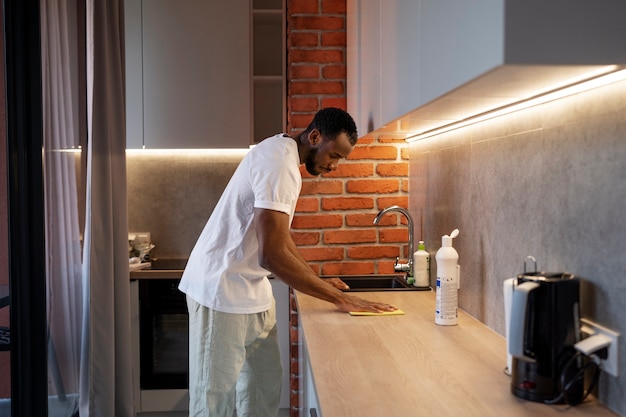
Choosing the right flooring for a kitchen goes beyond aesthetics; it is a crucial investment in functionality and durability. A well-installed kitchen floor can dramatically enhance the room’s ambiance while providing a robust surface that withstands daily wear and tear. Professional kitchen floor installation services ensure that this vital component of the kitchen not only looks impeccable but also performs exceptionally over time. It is essential to consider factors such as material quality, installation precision, and design compatibility when opting for a new kitchen floor.
Understanding the Importance of Professional Installation
A professionally installed kitchen floor offers numerous benefits that justify the investment. Key considerations include:
- Durability: Quality materials and expert techniques ensure longevity, reducing the need for frequent repairs or replacements.
- Safety: Proper installation minimizes the risk of slips and falls, a crucial factor in a high-traffic area like a kitchen.
- Value Addition: A well-installed floor can significantly increase the overall value of the home, making it an attractive feature for potential buyers.
For more insights into professional installation benefits, find out more about this approach.
Choosing the Right Flooring Material
Considerations for Material Selection
Selecting the appropriate flooring material is a critical step in kitchen design. Some factors to consider include:
- Moisture Resistance: Kitchens are prone to spills and splashes, making moisture-resistant materials like tile or vinyl ideal choices.
- Durability: High durability materials like stone or ceramic can withstand heavy foot traffic without showing wear.
- Maintenance: Opting for materials that are easy to clean and maintain can save time and effort in the long run.
Discover expert strategies here to make an informed decision on flooring materials that best suit your needs.
Installation Techniques for Optimal Results
Expert installation techniques are imperative to achieve a flawless finish and ensure the longevity of the kitchen floor. Some techniques to consider include:
- Subfloor Preparation: Properly preparing the subfloor is crucial to prevent future issues such as uneven surfaces or tile cracks.
- Precision Cutting: Accurate cutting and fitting of flooring pieces ensure seamless transitions and a polished appearance.
- Advanced Adhesive Application: The use of high-quality adhesives guarantees that the flooring stays securely in place.
For more detailed guidance on installation techniques, explore advanced guides and tips.
Ensuring a Seamless Integration with Kitchen Design
A successful kitchen floor installation harmonizes with the overall kitchen design. Key elements to consider include:
- Color Coordination: The floor should complement the kitchen’s color scheme, creating a cohesive look.
- Style Matching: The design of the flooring should align with the kitchen’s style, whether modern, traditional, or rustic.
- Functional Layout: The flooring layout should facilitate efficient movement and workflow within the kitchen.
Learn about our tailored solutions that ensure a perfect blend of aesthetics and practicality.
Conclusion
Investing in quality kitchen floor installation services is crucial for creating a functional and aesthetically pleasing kitchen environment. By understanding the importance of professional installation, carefully selecting materials, and employing expert techniques, homeowners can enjoy a durable and beautiful kitchen floor for years to come. For additional information and comprehensive services, explore advanced guides and tips available online.
About the Author